📞  — free, 24/7
— free, 24/7 — free, 24/7| Package | Price per Dose | Price | |
|---|---|---|---|
| 5 bottles | NZ$29.04 | NZ$181.44 NZ$145.15 | |
| 4 bottles | NZ$34.72 | NZ$173.55 NZ$138.84 | |
| 3 bottles | NZ$43.11 | NZ$161.71 NZ$129.37 | |
| 2 bottles | NZ$58.39 | NZ$145.93 NZ$116.75 | |
| bottle | NZ$85.19 | NZ$106.48 NZ$85.19 |
Disclaimer: This page provides general information about Tobradex and is not a substitute for professional medical advice. May require a prescription depending on local rules in New Zealand. Always follow your clinician’s guidance and read the official patient information leaflet that accompanies the medicine.
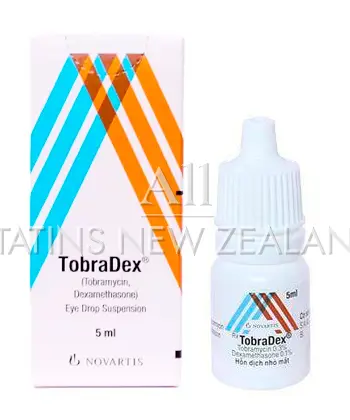
Tobradex is an eye medicine that combines two active ingredients: tobramycin, an antibiotic, and dexamethasone, a corticosteroid that reduces inflammation. It is designed to treat certain bacterial eye infections and to help control inflammation associated with those infections.
The medicine is supplied as an eye drop solution intended for use in the eye. It is usually used for short courses to address the infection and inflammation in the affected eye or eyes. The exact duration depends on the how the infection responds and your clinician’s plan.
Tobradex may require a prescription depending on local rules in New Zealand. Your pharmacist or doctor can explain whether a prescription is needed for you. Do not use Tobradex without clear instructions from a healthcare professional if you are not sure about the suitability of this medicine for your condition.
Common considerations include avoiding contact with the inside of the bottle, keeping the bottle tightly closed when not in use, and not sharing the bottle with others. Tobradex is intended for eye use only and should not be swallowed or used in other parts of the body unless advised by a clinician. If you have any questions about what Tobradex treats, ask your pharmacist or doctor for detailed guidance.
In some people, eye drops containing steroids can affect the eye surfaces with ongoing use. Your clinician will review your symptoms and decide if Tobradex is appropriate for you. If there is any uncertainty about this medicine, check the official patient information or speak with a healthcare professional.
Tobradex is used to treat bacterial eye infections that cause conjunctivitis (pink eye), blepharitis (inflammation of the eyelids), or some corneal infections. It can also be used to reduce inflammation that occurs with eye infections or after eye surgery when your clinician thinks this combination will help you recover more quickly.
In practice, Tobradex helps clear infection while reducing swelling, redness and irritation in the eye. This can improve comfort and vision as the eye heals, but the primary goal is to treat the infection and its inflammatory response together.
Because it contains a steroid, Tobradex is generally prescribed for short periods. Prolonged use can lead to side effects related to steroid use in the eye, so your clinician will set a course length based on your specific condition and response to treatment.
You should only use Tobradex for the condition it has been prescribed to treat. If your symptoms persist or worsen after a few days, seek a healthcare professional for a review. Do not use Tobradex for conditions other than those identified in your prescription without medical advice.
For children, the decision to use Tobradex will be made carefully by a clinician who considers the child’s age, weight and the nature of the infection or inflammation. Always follow the instructions given by the prescriber, and ask about any concerns before starting treatment with Tobradex.
The two active ingredients in Tobradex have distinct roles. Tobramycin is an antibiotic that helps kill certain bacteria that cause eye infections. This reduces the chance that the infection will worsen or spread to other parts of the eye or body.
Dexamethasone is a corticosteroid that reduces inflammation. By lowering inflammatory responses in the eye, it helps decrease redness, swelling and irritation that often accompany infections. The combination allows both infection control and symptomatic relief as the eye heals.
By addressing both infection and inflammation, Tobradex can help restore comfort and improve the chances of a faster recovery. It is important to use the medicine exactly as prescribed to ensure both components work effectively and safely together.
Because the steroid component can affect how the eye heals and how pressure is maintained inside the eye, your clinician will monitor you for any signs of increased eye pressure, thinning of the cornea, or delayed healing if Tobradex is used for a period of time or in higher-than-recommended amounts.
If there are questions about how this medicine interacts with the specific bacteria you have or with any other eye conditions you may have, discuss them with your healthcare professional. They can explain what to expect from Tobradex in your case and how to monitor your response to treatment.
Before applying Tobradex, wash your hands to reduce the risk of introducing bacteria into the eye. Make sure the bottle and dropper are clean and intact before use.
To apply the drops, tilt your head back and gently pull down the lower eyelid to create a small pocket. Place the prescribed number of drops into this pocket without touching the eye or eyelid with the dropper tip. Avoid letting the dropper touch any surface to reduce contamination risk.
After placing the drops, close your eye gently and keep it closed for a short time. You can move your eyeball around slowly to help spread the medicine, but avoid blinking forcefully. If you were instructed to apply more than one drop, wait a short interval between drops as advised by your clinician.
If you are using other eye drops or ointments, check with your pharmacist or clinician about the correct timing. In many cases, eye drops should be spaced by several minutes to allow each medicine to be absorbed properly before the next one is used.
Do not wear contact lenses while using Tobradex unless your clinician tells you it is safe to do so. If you normally wear contact lenses, ask how long you should wait after applying the drops before reinserting them. In many situations, lenses should be removed during treatment and may be reinserted only when your clinician says it is appropriate.
Store Tobradex as directed by the product information. Do not use the bottle beyond its expiry date, and discard any remaining drops after the treatment course ends or if instructed by your clinician. Keep the medicine out of reach of children and away from heat or direct sunlight.
Never share Tobradex with others, even if their eye symptoms appear similar. Eye drops can become contaminated and sharing can spread infection or cause other problems. If you experience eye trauma or a sudden change in vision during treatment, seek medical advice promptly.
Tobradex should not be used in people who have a known allergy to tobramycin, dexamethasone, or any other ingredients in the product. If you have had an allergic reaction to similar medicines in the past, inform your clinician before starting Tobradex.
The medicine should not be used for certain eye conditions where a steroid could worsen the problem, such as certain viral eye infections (for example, herpes simplex infections) or fungal eye infections. A clinician will determine whether Tobradex is appropriate based on the diagnosis.
People with active fungal infections of the eye or with perforated corneas require special assessment before receiving a steroid-containing product like Tobradex. Your clinician may consider an alternative treatment if these conditions are present.
In addition, those with a history of glaucoma, cataract progression, or other significant eye conditions should use Tobradex only under close medical supervision. If you have any of these conditions, discuss them with your clinician before starting treatment to understand the potential risks and benefits.
Tobradex contains a steroid component, which means there is a potential for steroid-associated side effects when used in the eye. Prolonged use or overuse can sometimes lead to increased intraocular pressure, delayed healing, or thinning of the cornea. Regular follow-up with a clinician is advised during a course of treatment.
Infections can sometimes worsen if a treatment suppresses the immune response in the eye, so it is important to ensure that the infection is indeed bacterial and appropriate for Tobradex. If you notice new or worsening symptoms, such as fever, increasing eye pain, or vision changes, contact a health professional promptly.
Tobradex may interact with other eye medicines or systemic medicines. Always disclose all medicines you are taking, including non-prescription products and supplements, to your clinician before starting Tobradex. Do not alter the course of treatment or switch to other therapies without professional guidance.
If you are pregnant, planning pregnancy, or breastfeeding, speak with your clinician about the potential risks and benefits of using Tobradex. The decision will depend on the condition being treated and the potential benefit to you and your baby. Never discontinue a prescribed treatment without first consulting a healthcare professional.
Common and milder side effects from Tobradex may include burning, stinging, or a temporary blurred vision right after applying the drops. These sensations typically pass within a short time, but if they persist or worsen, contact a clinician for advice.
Other possible effects include redness or irritation of the eye, tearing, or an unusual taste in the mouth after application. These are usually temporary and resolve once treatment ends or with medical guidance.
Serious but rare side effects that require urgent medical attention include severe eye pain, persistent redness, significant changes in vision, swelling around the eye, or signs of an allergic reaction (such as rash, swelling of the face, lips, or tongue, or trouble breathing). If you experience any of these, seek urgent medical help.
Long-term or repeated use of steroid-containing eye drops can increase the risk of infections or cause cataracts or glaucoma in some cases. Your clinician will consider these risks and monitor you during treatment. Do not continue using the medicine beyond the period prescribed without advice.
Report any side effects to your pharmacist or clinician, especially if they are bothersome or do not go away. This helps ensure that your treatment remains safe and appropriate for you.
There are no widely known interactions between Tobradex and many other eye drops. However, inform your clinician about all medicines you are taking for the eyes, including other steroids, antibiotics, or medicated drops. They can advise on the safest sequence and timing for using multiple products.
If you are taking systemic medicines, there is a possibility of interactions that could affect how Tobradex works or increase side effects. Your clinician can assess these risks by reviewing all current medications and health conditions.
Avoid sharing the eye drop bottle with others or using someone else’s eye drops, as this could introduce new bacteria or cause other eye problems. If you are unsure about compatibility with other treatments, ask a healthcare professional for guidance before continuing with Tobradex.
If you have been prescribed other topical treatments for the eyes, including over-the-counter products, maintain the recommended intervals between applications unless advised otherwise by your clinician. This helps each product work as intended.
In any case, always read the patient information leaflet supplied with Tobradex and discuss any concerns with your pharmacist or doctor before starting or continuing treatment.
During pregnancy or breastfeeding, the use of Tobradex should be discussed with a clinician. They will weigh the benefits of treating the eye condition against any potential risks to the pregnancy or baby. Do not start or stop treatment on your own during pregnancy or while breastfeeding.
It is important to inform your clinician about all aspects of your health, including pregnancy status, early pregnancy, or plans for pregnancy. The decision to use Tobradex will be individualized based on the specific infection or inflammation and the stage of pregnancy if applicable.
If a pregnant patient requires eye treatment with Tobradex, careful monitoring may be advised to minimize potential risks. Do not assume that a medicine is safe for use in pregnancy without professional guidance.
Breastfeeding considerations should also be discussed, as the active ingredients could be absorbed in small amounts. Your clinician can advise on whether Tobradex is suitable while breastfeeding and if any alternatives are preferable.
Many people notice relief in symptoms such as reduced redness and irritation within a couple of days. The underlying infection may take longer to clear. If there is no improvement after a few days or if symptoms worsen, contact your clinician for advice.
If a dose is missed, apply it as soon as you remember. If it is near the time for your next dose, skip the missed dose and resume your usual schedule. Do not double the dose to make up for a missed one unless advised by a clinician.
In general, space out the timing between Tobradex and other eye drops by several minutes to allow each product to be absorbed. Tell your clinician about all medicines you use for the eyes, as some combinations may affect how well each medicine works or increase side effects.
Contact lenses are usually advised against during Tobradex treatment. If you normally wear lenses, remove them before applying the drops and ask how long you should wait before reinserting them. Your clinician can provide personalised guidance based on your eye condition.
Seek urgent medical help if you experience signs of a serious allergic reaction, such as swelling of the face or lips, rash, or trouble breathing. Stop using the drops and contact a clinician for advice if you notice a severe reaction.
Always follow the recommended course length provided by your clinician. Do not stop using Tobradex early unless advised. Stopping too soon could allow the infection to return or not fully resolve.
It is common to have temporarily blurred vision after applying eye drops. If vision remains blurry for a longer period or interferes with daily activities, contact your clinician for guidance. Avoid driving or operating machinery if your vision is not clear.
Tobradex may be prescribed for children when a clinician judges it appropriate. The dosing and duration will be tailored to a child’s age and condition. Always follow the clinician’s instructions and check for any child-specific considerations with your pharmacist.
If symptoms worsen or do not improve after a few days of treatment, contact a healthcare professional for a review. It may be necessary to reassess the diagnosis and adjust the treatment plan if needed.
Most ophthalmic drops are stored at room temperature unless the label specifies otherwise. Keep Tobradex away from heat and direct sunlight and ensure the bottle is tightly closed when not in use. If there are special storage instructions, follow them exactly as provided by your clinician or the product information.
Prolonged use of steroid-containing eye drops can increase the risk of eye complications. Tobradex is generally used for short periods as directed by a clinician. If you think you need ongoing treatment beyond the recommended course, discuss this with your clinician to weigh the benefits and potential risks.
For accurate and patient-focused information, refer to the official consumer medicine information leaflets supplied with Tobradex and any guidance provided by your pharmacist or clinician. NZ health authorities and professional bodies provide general ophthalmic medicine information that may help with questions about eye drops and infections.
Always check the official leaflet for Tobradex for detailed instructions, contraindications, and safety warnings. If anything is unclear, contact a pharmacist or doctor for clarification before continuing with treatment.
If you need further reads, consult the manufacturer’s patient information and the New Zealand Medicines Information resources through your healthcare professional. Your clinician can tailor advice to your specific health needs and local guidelines.
14–21 days. Free from NZ$351.86 .
5–9 days. NZ$52.78
−10% when paying with cryptocurrency.
−10% on all repeat orders.
All orders are packed in neutral, unbranded boxes with no product name on the outside.